
Traditional playgrounds still have value—kids love climbing, sliding, and exploring. But the market has changed. Families expect “something new,” operators need stronger repeat visits, and competition is louder than ever. This is where interactive electronic games become a powerful upgrade strategy.
They don’t replace classic play. They modernize it. They add measurable engagement, faster game cycles, and a fresh reason for customers to return—without rebuilding the entire facility.
This article explains how interactive electronic games can be used to refresh traditional playgrounds, increase commercial performance, and create a more future-ready entertainment concept.
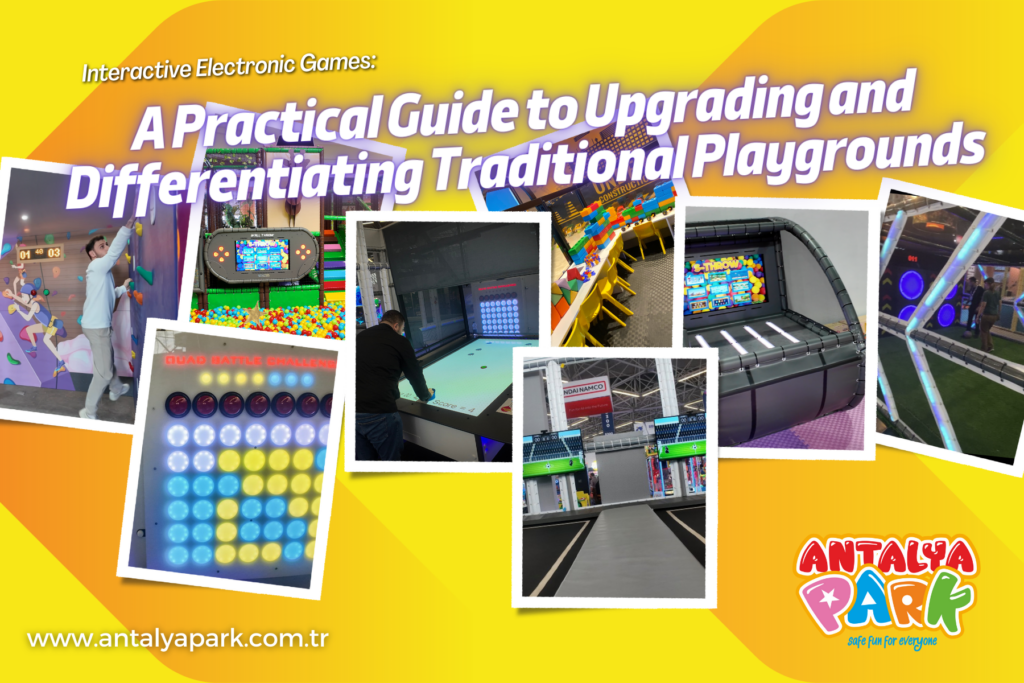
1) The Core Idea: Turn Static Play Into Dynamic Experience
Traditional playgrounds are mostly static. Kids use the same routes, repeat the same motions, and after a few visits the surprise factor fades. Interactive electronic games introduce a changing layer: lights, sensors, scoring, missions, reaction challenges, and team competition.
The business value is simple:
- dynamic play increases replayability
- replayability increases repeat visits
- repeat visits stabilize revenue
When the game changes each round, the venue feels “new” more often—even if the physical space stays the same.
2) Why Interactive Electronic Games Work So Well in Existing Facilities
One of the biggest advantages is that interactive electronic games can be integrated into a traditional play environment without a full redesign.
They can be used to:
- create new attraction points inside an existing layout
- activate “weak corners” or low-traffic zones
- refresh the venue seasonally with new game modes
- add a competitive layer for older kids and teenagers
- improve engagement during peak times and reduce boredom
For operators, this is a smart upgrade path: less disruption, faster implementation, stronger marketing impact.
3) Who They Are For: Expanding Your Audience Beyond Small Kids
Many traditional soft play venues struggle with one common challenge: older kids grow out of them. Interactive electronic games help solve this by adding:
- reaction-based challenges
- teamwork and competition
- fast cycles and scoreboard motivation
- “try again” behavior driven by measurable results
This expands the audience to include older children, teenagers, and even adults in some formats—making the venue more inclusive and more profitable.
4) Where the Revenue Impact Comes From
Interactive electronic games don’t just look modern—they support business outcomes:
Higher dwell time
When kids compete, improve scores, and repeat rounds, they stay longer.
Stronger repeat visits
Score-based play creates a reason to return: “Next time I’ll beat my record.”
Better party experience
Parties become more exciting when there are tournament moments and team games.
Higher perceived value
Families accept pricing more easily when the venue feels upgraded and tech-enabled.
Marketing advantages
LED visuals, dynamic movement, and competition make content more shareable on social media.
5) Best Upgrade Strategies for Traditional Playgrounds
A smart approach is not to “add games randomly,” but to upgrade with purpose. Here are proven strategies:
Strategy A: Add a signature attraction point
Install one interactive feature that becomes the “hero” of the venue—what people remember and talk about.
Strategy B: Create a mini interactive zone
Combine multiple interactive games into a small circuit and market it as an “interactive area” inside your facility.
Strategy C: Activate underused space
If you have a quiet corner, corridor, or unused wall, interactive games can turn it into a high-engagement zone.
Strategy D: Upgrade for age segmentation
Use interactive games specifically to serve older kids, while traditional soft play supports younger ages.
6) Operational Benefits: Easy Management When Designed Correctly
When interactive electronic games are selected and positioned properly, they can actually make operations easier:
- clear game boundaries reduce uncontrolled running
- short rounds improve queue flow
- scoring systems reduce “arguing” and improve fairness
- staff can manage engagement with simple instruction
The key is choosing systems that are durable, easy to maintain, and supported by reliable after-sales service.
7) Common Mistakes (And How to Avoid Them)
- installing interactive games without considering visitor flow
- placing them in cramped zones where queues block circulation
- choosing games that are too complex to explain quickly
- ignoring maintenance access and daily checking routines
- treating them as decoration instead of a revenue tool
Interactive electronic games should be chosen as part of an upgrade strategy—because the goal is performance, not only appearance.
Conclusion: Modernize Without Rebuilding
The smartest facility upgrades are the ones that refresh your concept without forcing you to start from zero. Interactive electronic games allow traditional playgrounds to evolve: more energy, more replayability, more differentiation, and a more future-ready guest experience.
They help your venue move from “a place kids visited once” to “a place kids want to return to—because the game is never the same twice.”