Playground Manufacturer: How to Choose a Partner That Delivers Long-Term Value

Choosing a Playground Manufacturer is not only about selecting equipment that looks good in a catalog. A playground is judged over time. It must stay safe, durable, and visually strong under real use. If planning is weak, you get congestion, supervision stress, and faster wear. If materials and finishing are weak, the playground starts to look tired and maintenance costs rise.
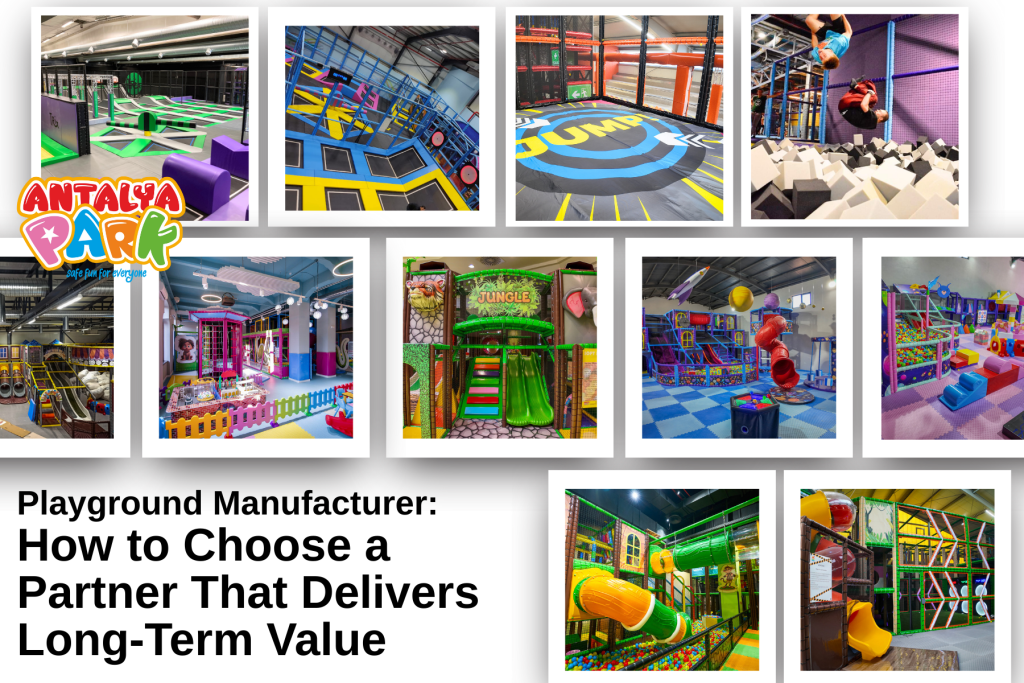
Playground Manufacturer Antalya Park How to choice a partner

This guide explains what buyers should evaluate when selecting a Playground Manufacturer, especially for commercial and high-traffic projects.

Playground Manufacturer Planning That Starts With the Site

A professional Playground Manufacturer should begin with your site realities, not with a fixed package. Whether the project is outdoor or indoor, the design must fit the space, the users, and the daily operation.

A strong manufacturer will ask about:
Age groups and expected daily traffic
Supervision needs and visibility expectations
Site constraints such as space limits, access routes, and nearby obstacles
Surface planning and safe fall zones
Weather exposure and long-term maintenance goals

When the planning is correct, the playground works better and stays safer.

Playground Manufacturer Safety Thinking You Can Evaluate

A reliable Playground Manufacturer designs with recognized safety expectations in mind, often referenced under EN and ASTM. What matters is not the claim. It is whether safety decisions are visible in the design and explained clearly.

Ask how they handle:
Fall height planning and impact zones
Spacing and prevention of entrapment risks
Edge finishing and protection at corners and junctions
Structural stability and anchoring logic
Installation documentation and inspection readiness

Clear answers indicate real engineering experience.

Playground Manufacturer Materials and Durability

The real cost of a playground is the total cost of ownership. A Playground Manufacturer should plan for wear and long-term appearance, not only the opening day.

Look for practical durability thinking such as:
Corrosion resistance and stability for long-term outdoor use
UV stability and color retention
Strong joint and fastener design that stays tight over time
Reinforced high-wear areas like steps, bridges, and landings
Service-friendly parts that can be replaced without major dismantling

Ask what typically wears first and how spare parts are handled. Honest answers help you plan.

Design Quality Beyond Feature Count

Many buyers try to fit too many features into a limited area. A strong Playground Manufacturer focuses on play value and flow.

Good design usually includes:
Clear circulation to reduce collisions and bottlenecks
Balanced challenge levels for different ages
Supervision-friendly sightlines
Rest points that reduce crowding near popular features
A layout that feels intuitive for first-time visitors

A playground with better flow often performs better than a crowded playground with more features.

Quality Control and Installation Readiness

Even the best design can underperform if manufacturing consistency is weak or installation planning is unclear. A professional Playground Manufacturer supports the project with clear drawings, structured packaging, and realistic timelines.

Before you commit, confirm:
What quality control steps happen before shipping
How parts are labeled and packaged for installation
Who installs and what is included
What site preparation is required
What documentation is provided for handover

Installation readiness reduces mistakes and protects safety.

Playground Manufacturer References That Match Your Use Case

Proof matters. Ask for completed projects similar to yours. A school yard is different from a hotel playground. A public park is different from a commercial indoor venue.

Request:
Real photos and videos of completed installations
Project scope notes and challenges solved
Typical timelines from design to delivery
After-sales support and spare parts response examples

Real references show what the manufacturer delivers in reality.

Why Many Buyers Review

Buyers often compare manufacturers based on planning quality, production control, and proven project delivery. Antalya Park is one company many investors review because it supports projects from design to production and installation readiness, with a focus on commercial performance. For support sites, linking to catalogs and completed project references helps visitors evaluate real installations and scope.

Final Checklist Before You Choose a Playground Manufacturer

A strong Playground Manufacturer usually checks these boxes:
They start with your site and audience needs
They explain safety decisions clearly with practical logic
They plan materials for durability and easy maintenance
They design for flow and supervision, not only feature count
They provide clear installation documentation and support
They can show real references from comparable projects

Choosing the right Playground Manufacturer helps you build a playground that stays safe, looks premium, and performs reliably for years.
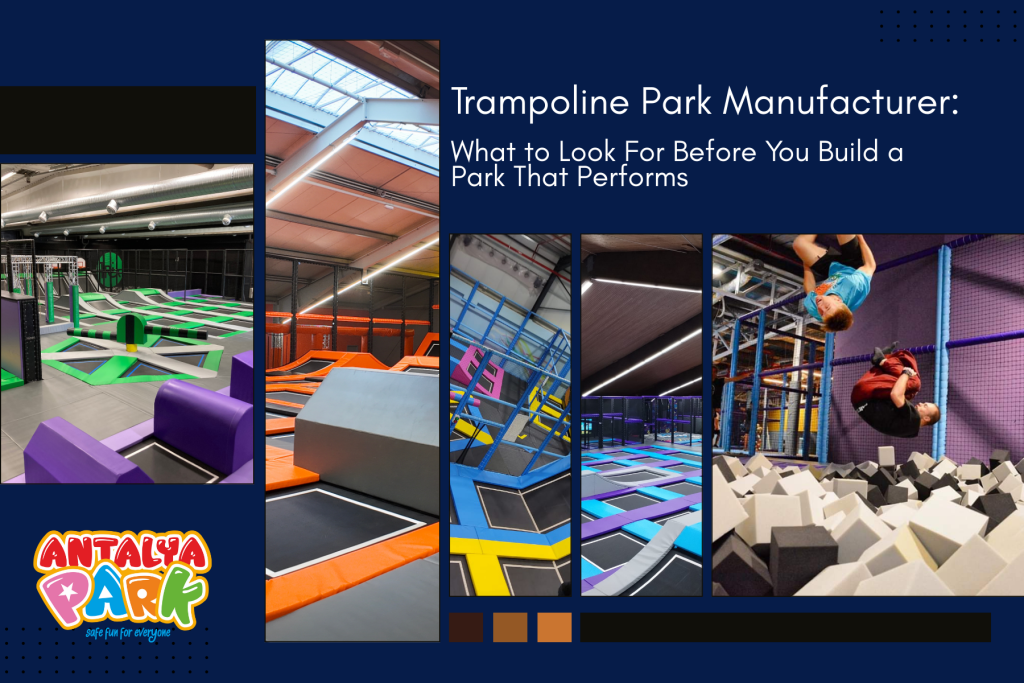
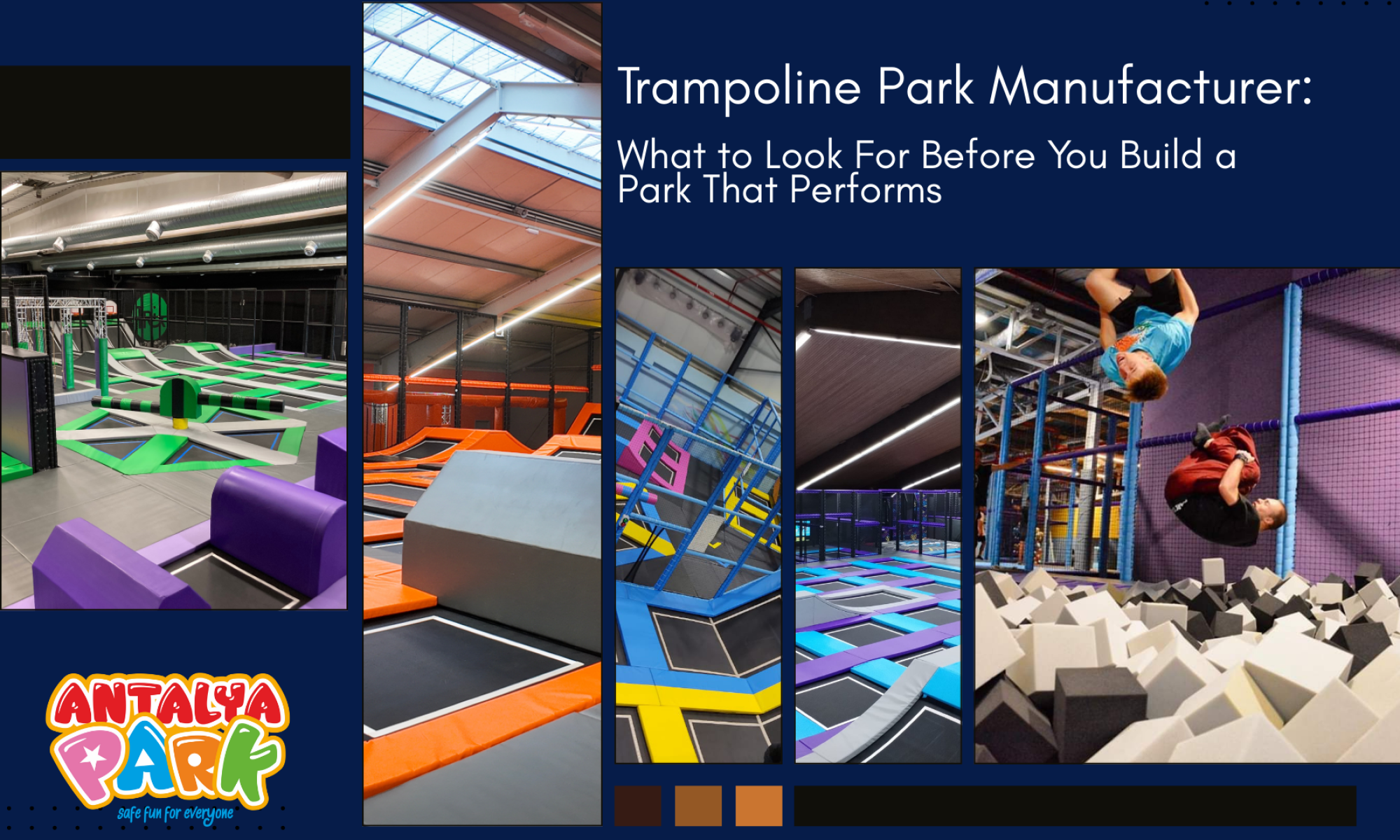
Trampoline Park Manufacturer: What to Look For Before You Build a Park That Performs

Choosing a Trampoline Park Manufacturer is not only about buying equipment. It is about building a high-impact venue that must stay safe, organized, and profitable under daily pressure. The park will be tested by busy weekends, school groups, and nonstop repetition. That is when layout mistakes, weak wear planning, and unclear installation details become expensive.

This article explains how to evaluate a Trampoline Park Manufacturer with a practical buyer mindset and why the right partner makes a measurable difference in uptime and guest satisfaction.

Trampoline Park Manufacturer: What to Look For Before You Build a Park That Performs

Trampoline Park Manufacturer Planning That Starts With the Building

A professional Trampoline Park Manufacturer should begin with your floor plan and venue constraints. Ceiling height, columns, emergency exits, sprinkler lines, HVAC, and lighting directly affect zone placement and safe clearances. A generic package that does not adapt to your space often leads to redesign work and delays.

A strong manufacturer also asks about your operation. Are you focused on families, teens, schools, or mixed groups. Will you run parties, memberships, or events. These answers influence zoning, entry control, briefing areas, and staff station planning.

Trampoline Park Manufacturer Layout That Controls Risk and Improves Flow

In trampoline parks, layout is a safety feature. A good Trampoline Park Manufacturer designs circulation so guests move naturally without collision points and staff can supervise effectively.

Look for layout decisions that include:
Clear entry and rule briefing zone placement
Separation of different age groups and skill levels
Buffer space around faster activity areas
Visibility planning that reduces blind spots
Smooth circulation that prevents bottlenecks near popular zones

A park that feels controlled during peak hours usually earns better reviews and drives repeat visits.

Trampoline Park Manufacturer Focus on Zone Transitions

Many incidents happen at transitions, not in the middle of a jump zone. Entry points, shared edges, corners, and exit areas are where guests stop suddenly and change direction.

Ask the Trampoline Park Manufacturer how they design:
Safe borders between zones
Clear visual boundaries to reduce drift into higher-risk areas
Edge and corner protection details
Space planning near exits where guests slow down

Strong transition planning reduces incidents and improves staff confidence.

Durability and Wear Planning

High-impact repetition is guaranteed. The real cost of the park is not only the initial purchase. It is the long-term cost of maintenance and downtime. A professional Trampoline Park Manufacturer should talk openly about wear planning.

Ask about:
Reinforced high-wear areas such as entries and corners
Connection stability designed to stay tight over time
Service-friendly construction that supports fast repairs
Spare parts strategy and recommended local stock
Typical issues seen after the first year of operation

The best manufacturer does not promise zero maintenance. They provide a clear plan to keep downtime low.

Trampoline Park Manufacturer Installation Planning and Documentation

Even great equipment can underperform if installation is rushed or unclear. A reliable Trampoline Park Manufacturer provides structured documentation and a realistic installation plan.

Before signing, confirm:
Clear technical drawings and assembly guidance
Packaging and labeling that supports correct installation sequence
Site preparation requirements and timeline assumptions
Commissioning checks and handover documentation
Support during installation if needed

Installation readiness protects safety and your opening date.

After-Sales Support That Protects Uptime

The first months after opening are intense. Staff are learning, guest traffic is high, and small issues appear. This is when you discover whether the manufacturer is a partner or just a supplier.

Ask about response times, spare parts delivery, and how technical support works. Uptime is profit. Slow support becomes expensive quickly.

Why Many Buyers Review Antalya Park

Investors typically compare manufacturers based on planning quality, production consistency, and proof through completed projects. Antalya Park is often reviewed because it supports projects from design to production and installation readiness, with a focus on commercial performance. For support sites, directing readers to catalogs and completed project references helps them evaluate real installations and scope.

Final Checklist Before You Choose a Trampoline Park Manufacturer

A strong Trampoline Park Manufacturer usually checks these boxes:
They review your building before proposing a layout
They plan flow, supervision visibility, and safe zone transitions
They discuss durability and wear planning realistically
They provide clear installation documentation and support
They define after-sales support and spare parts strategy
They can show real references from comparable projects

Choosing the right Trampoline Park Manufacturer helps you build a park that stays safe, operates smoothly, and keeps guests coming back.

Indoor Playground Manufacturer: What to Check Before You Build a Venue Families Trust

Choosing an Indoor Playground Manufacturer is not only about choosing a design that looks fun. Indoor venues are judged fast and honestly. Parents notice cleanliness, organization, and safety within seconds. Kids test every surface and every corner. Staff need clear sightlines and smooth flow to keep control during busy hours. If any of these pieces are weak, the venue can feel stressful even if the equipment looks impressive.

This guide explains what serious buyers evaluate when selecting an Indoor Playground Manufacturer for commercial indoor venues.

Indoor Playground Manufacturer Planning That Starts With Your Space

A professional Indoor Playground Manufacturer should begin with your floor plan and building constraints. Indoor projects must work around ceiling height, columns, emergency exits, sprinkler lines, HVAC, lighting, and reception flow. A fixed package that ignores these details often creates expensive revisions later.

A good manufacturer will also ask about your business model. A mall play zone, a hotel kids club, and a family entertainment center have different needs for capacity, parties, seating, and supervision. When the manufacturer understands your operation early, the design becomes easier to manage after opening.

Indoor Playground Manufacturer Layout That Stays Calm When It Gets Busy

Many venues look good on opening day but feel chaotic on weekends. Layout is the difference. A strong Indoor Playground Manufacturer designs the play system to support flow and control, not only feature count.

Look for layout planning that includes:
Clear zoning between toddlers and older kids
Smooth circulation with fewer bottlenecks
Safe transitions near slides, stairs, and crossing points
Visibility for staff and parents without blind spots
Balanced pacing, with both active and calmer areas

A venue that feels organized during peak hours builds trust. Trust drives repeat visits.

Indoor Playground Manufacturer Zoning for Toddlers and Older Kids

The best indoor playgrounds avoid mixing high-speed play with toddler areas. A capable Indoor Playground Manufacturer creates natural separation without making the venue feel divided.

Check where toddler access begins and ends, how crossings are controlled, and whether a parent can clearly understand where each age group should play. Good zoning reduces incidents and reduces staff stress.

Indoor Playground Manufacturer Safety Thinking You Can Evaluate

A reliable Indoor Playground Manufacturer designs with recognized safety expectations in mind, often referenced under EN and ASTM. What matters most is whether safety decisions are clearly explained and visible in the design.

Ask how the manufacturer handles:
Fall height planning and safe landings
Protected edges, corners, and junction points
Gaps and pinch point prevention
Netting and barrier placement
Installation documentation and inspection readiness

If the answers are vague, it is usually a sign that safety was not deeply engineered into the system.

Indoor Playground Manufacturer Materials That Support Hygiene and Durability

Indoor play areas are cleaned daily. The wrong material choices can make the venue look tired quickly. The right choices protect long-term appearance and reduce maintenance costs.

A professional Indoor Playground Manufacturer plans for:
Easy-to-clean surfaces and neat seam finishing
Reinforced high-wear zones like steps and entry points
Replaceable modular parts for faster maintenance
Consistent finishing quality across the entire play system

Parents notice cleanliness immediately. A clean-looking venue feels safer, and that directly affects your reviews and return visits.

Indoor Playground Manufacturer Installation and After-Sales Support

Even great equipment can underperform if installation is rushed. A strong Indoor Playground Manufacturer provides clear drawings, structured packaging and labeling, and realistic installation planning. This reduces mistakes and protects your opening timeline.

After-sales support matters just as much. Ask about spare parts availability, response times, and how support works after opening. When downtime is minimized, your business stays stable.

Indoor Playground Manufacturer Integration With Modern Attraction Zones –  Indoor Playground Manufacturer

Many venues improve performance by adding more variety. A strong Indoor Playground Manufacturer can help you integrate features that increase replay value without creating chaos. This can include interactive zones, challenge elements, or themed areas that keep older children engaged and create stronger reasons to return.

The key is integration. Features should support flow, visibility, and safe zoning.

Why Many Investors Review Antalya Park as an Indoor Playground Manufacturer

Buyers compare manufacturers based on planning quality, production control, and real project proof. Antalya Park is one company many investors review because it supports projects from design to production and installation readiness, with a focus on commercial performance. For support sites, directing readers to catalogs and completed project references helps them evaluate real installations and overall scope.

Final Checklist Before You Choose an Indoor Playground Manufacturer

Use this checklist to keep your decision practical:
They review your floor plan before proposing a layout
Layout supports smooth flow, clear zoning, and supervision visibility
Safety decisions are explained clearly with documentation
Materials are planned for hygiene and long-term durability
Installation planning is detailed and timeline-friendly
After-sales support and spare parts strategy are defined

A strong Indoor Playground Manufacturer helps you build a venue that families trust, staff can manage, and operators can run profitably for years.

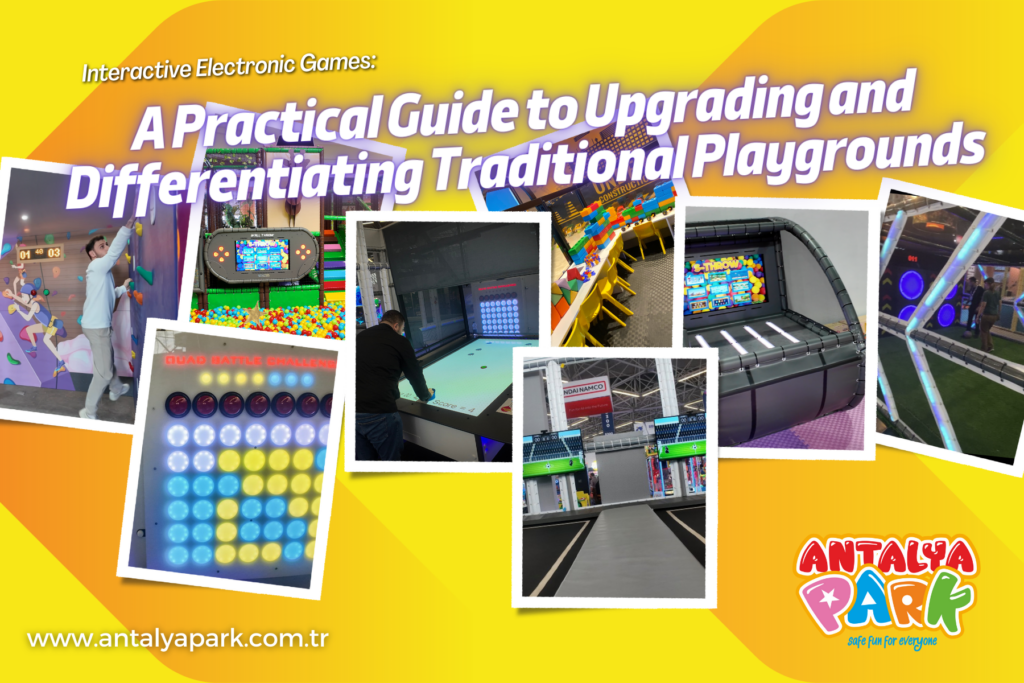
Interactive Electronic Games: A Practical Guide to Upgrading and Differentiating Traditional Playgrounds

Traditional playgrounds still have value—kids love climbing, sliding, and exploring. But the market has changed. Families expect “something new,” operators need stronger repeat visits, and competition is louder than ever. This is where interactive electronic games become a powerful upgrade strategy.

They don’t replace classic play. They modernize it. They add measurable engagement, faster game cycles, and a fresh reason for customers to return—without rebuilding the entire facility.

This article explains how interactive electronic games can be used to refresh traditional playgrounds, increase commercial performance, and create a more future-ready entertainment concept.


1) The Core Idea: Turn Static Play Into Dynamic Experience

Traditional playgrounds are mostly static. Kids use the same routes, repeat the same motions, and after a few visits the surprise factor fades. Interactive electronic games introduce a changing layer: lights, sensors, scoring, missions, reaction challenges, and team competition.

The business value is simple:

  • dynamic play increases replayability
  • replayability increases repeat visits
  • repeat visits stabilize revenue

When the game changes each round, the venue feels “new” more often—even if the physical space stays the same.


2) Why Interactive Electronic Games Work So Well in Existing Facilities

One of the biggest advantages is that interactive electronic games can be integrated into a traditional play environment without a full redesign.

They can be used to:

  • create new attraction points inside an existing layout
  • activate “weak corners” or low-traffic zones
  • refresh the venue seasonally with new game modes
  • add a competitive layer for older kids and teenagers
  • improve engagement during peak times and reduce boredom

For operators, this is a smart upgrade path: less disruption, faster implementation, stronger marketing impact.


3) Who They Are For: Expanding Your Audience Beyond Small Kids

Many traditional soft play venues struggle with one common challenge: older kids grow out of them. Interactive electronic games help solve this by adding:

  • reaction-based challenges
  • teamwork and competition
  • fast cycles and scoreboard motivation
  • “try again” behavior driven by measurable results

This expands the audience to include older children, teenagers, and even adults in some formats—making the venue more inclusive and more profitable.


4) Where the Revenue Impact Comes From

Interactive electronic games don’t just look modern—they support business outcomes:

Higher dwell time

When kids compete, improve scores, and repeat rounds, they stay longer.

Stronger repeat visits

Score-based play creates a reason to return: “Next time I’ll beat my record.”

Better party experience

Parties become more exciting when there are tournament moments and team games.

Higher perceived value

Families accept pricing more easily when the venue feels upgraded and tech-enabled.

Marketing advantages

LED visuals, dynamic movement, and competition make content more shareable on social media.


5) Best Upgrade Strategies for Traditional Playgrounds

A smart approach is not to “add games randomly,” but to upgrade with purpose. Here are proven strategies:

Strategy A: Add a signature attraction point

Install one interactive feature that becomes the “hero” of the venue—what people remember and talk about.

Strategy B: Create a mini interactive zone

Combine multiple interactive games into a small circuit and market it as an “interactive area” inside your facility.

Strategy C: Activate underused space

If you have a quiet corner, corridor, or unused wall, interactive games can turn it into a high-engagement zone.

Strategy D: Upgrade for age segmentation

Use interactive games specifically to serve older kids, while traditional soft play supports younger ages.


6) Operational Benefits: Easy Management When Designed Correctly – Interactive electronic games

When interactive electronic games are selected and positioned properly, they can actually make operations easier:

  • clear game boundaries reduce uncontrolled running
  • short rounds improve queue flow
  • scoring systems reduce “arguing” and improve fairness
  • staff can manage engagement with simple instruction

The key is choosing systems that are durable, easy to maintain, and supported by reliable after-sales service.


7) Common Mistakes (And How to Avoid Them)

  • installing interactive games without considering visitor flow
  • placing them in cramped zones where queues block circulation
  • choosing games that are too complex to explain quickly
  • ignoring maintenance access and daily checking routines
  • treating them as decoration instead of a revenue tool

Interactive electronic games should be chosen as part of an upgrade strategy—because the goal is performance, not only appearance.


Conclusion: Modernize Without Rebuilding – Interactive electronic games

The smartest facility upgrades are the ones that refresh your concept without forcing you to start from zero. Interactive electronic games allow traditional playgrounds to evolve: more energy, more replayability, more differentiation, and a more future-ready guest experience.

They help your venue move from “a place kids visited once” to “a place kids want to return to—because the game is never the same twice.”

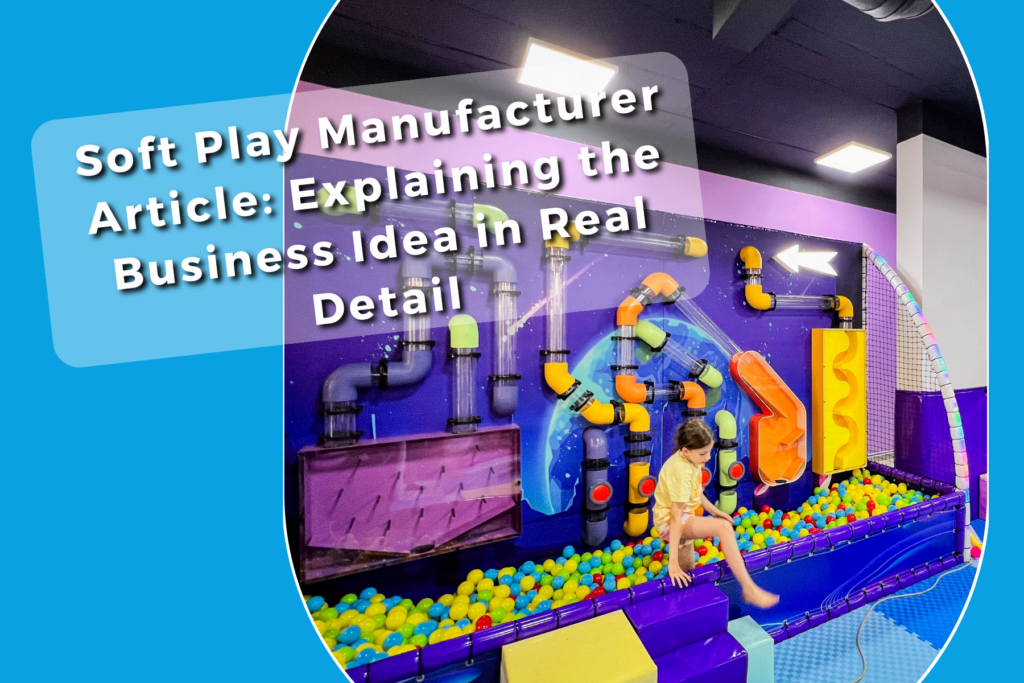
Soft Play Manufacturer Article: Explaining the Business Idea in Real Detail

A soft play project is not simply “buy equipment and open the doors.” Done right, it’s a repeat-visit business built on safe design, smart operations, and a strong customer promise: children feel excited, parents feel comfortable, and the venue feels worth coming back to. That’s why working with a soft play manufacturer is not only a supply choice—it’s the foundation of your business model.

This article explains the soft play business idea in detail: how revenue is created, what makes the concept succeed, and how the right manufacturer supports the full journey.


1) The Core Business Idea: Sell Time, Safety, and Convenience

A soft play venue does not really sell “a playground.” It sells:

  • time (kids stay engaged longer, parents relax longer)
  • safety (parents trust the environment)
  • convenience (easy access, clean space, predictable experience)

That combination creates the engine of repeat visits. When customers feel safe and satisfied, they return. When they return, your marketing costs drop and your revenue becomes more stable.


2) Who Pays—and Why They Come Back

Your primary customer is usually the parent, not the child. Children create demand (“I want to go again”), but parents make the decision. Parents return when they believe the venue offers:

  • safe, visible play with controlled risk
  • hygiene and cleanliness that feels reliable
  • friendly staff and clear rules
  • smooth entry/exit, comfortable seating, and simple supervision
  • value for money (their child actually stays busy)

A professional soft play manufacturer should design around this reality—because the customer journey is both emotional and practical.


3) Where the Revenue Comes From (Beyond Entry Tickets)

A soft play business typically grows through multiple income streams. The most common are:

  • entry tickets / timed sessions (the base layer of revenue)
  • birthday parties (high-margin, predictable packages)
  • food & beverage (parents sit = parents consume)
  • membership programs (monthly or multi-visit passes)
  • school/group visits (weekday traffic stabilizer)
  • sponsorships / brand corners (optional, depending on market)

The job of a strong layout is to extend stay time and make the venue “party-ready.” The job of smart operations is to turn peak demand into controlled, profitable flow.


4) The Role of a Soft Play Manufacturer in Your Business Plan

A reliable soft play manufacturer influences business performance in ways many investors miss. They shape:

Safety and Trust

Safety is reputation. One bad incident can damage a brand. The manufacturer must design safe transitions, correct clearances, and age-appropriate challenges from day one.

Play Flow and Capacity

A good layout increases real capacity without feeling crowded. Better flow means:

  • fewer bottlenecks,
  • fewer collisions,
  • easier staff supervision,
  • more guests served per hour.

Zoning and Family Comfort

A separate toddler zone is often a game-changer. It reduces conflict between age groups and makes families feel the venue is “designed for them.”

Durability and Downtime

Downtime is lost revenue. If materials wear quickly or structures loosen, you lose operating hours and customer confidence. Quality materials reduce repairs and keep the venue looking new.

Installation and Opening Speed

Opening late can be expensive—rent, staffing, and marketing don’t wait. A disciplined manufacturer provides clear drawings, planned packaging, smooth logistics, and experienced installation.

After-Sales Support

Soft play is a living system. You need fast spare parts, guidance for periodic checks, and responsive support to keep operations stable.


5) Concept Planning: The “Invisible” Decisions That Define Success

A strong soft play business is built on details that customers may never notice—but will always feel.

Location Strategy

Soft play works best in places with consistent family traffic: malls, busy streets, family districts, tourist zones, or near schools. Parking and accessibility matter more than many people expect.

Session Structure

Timed sessions help capacity control. Unlimited play can work too, but only if you design flow and staffing to avoid overload.

Parent Comfort = Longer Stay

More seating, better visibility, and a calmer environment increase dwell time—and dwell time often increases food & beverage revenue.

Branding and Theme

A clean theme with strong “wow moments” improves social sharing (parents post photos) and drives organic marketing.


6) Common Mistakes Investors Make (And How to Avoid Them)

  • Buying equipment without a business model: layout must match revenue strategy.
  • Ignoring age zoning: toddlers and older kids need different play logic.
  • Underestimating hygiene and cleaning: operational pain becomes customer pain.
  • Choosing by price only: cheaper often means more repairs and downtime.
  • No party strategy: birthday parties are often the profit accelerator.
  • Weak after-sales planning: support keeps you open, not just warranty.

7) A Practical Roadmap: From Idea to Opening

A structured project usually follows this path:

  1. venue analysis and concept planning
  2. custom design and revisions
  3. production and quality control
  4. shipping and site readiness
  5. installation and safety checks
  6. staff training and soft opening
  7. marketing push and grand opening
  8. maintenance routine and ongoing optimization

A strong soft play manufacturer helps you stay on track across every stage—not only at the start.


Conclusion: Soft Play Is a Business System, Not a Product

The real soft play business idea is simple: create a safe, exciting environment that families trust, and build repeat visits through comfort, cleanliness, and strong play value. But delivering that simplicity in real life requires serious planning.

That’s why choosing the right soft play manufacturer is one of the most important business decisions you’ll make. The right partner doesn’t just sell you a structure—they help you build a stable, scalable, long-term revenue engine.

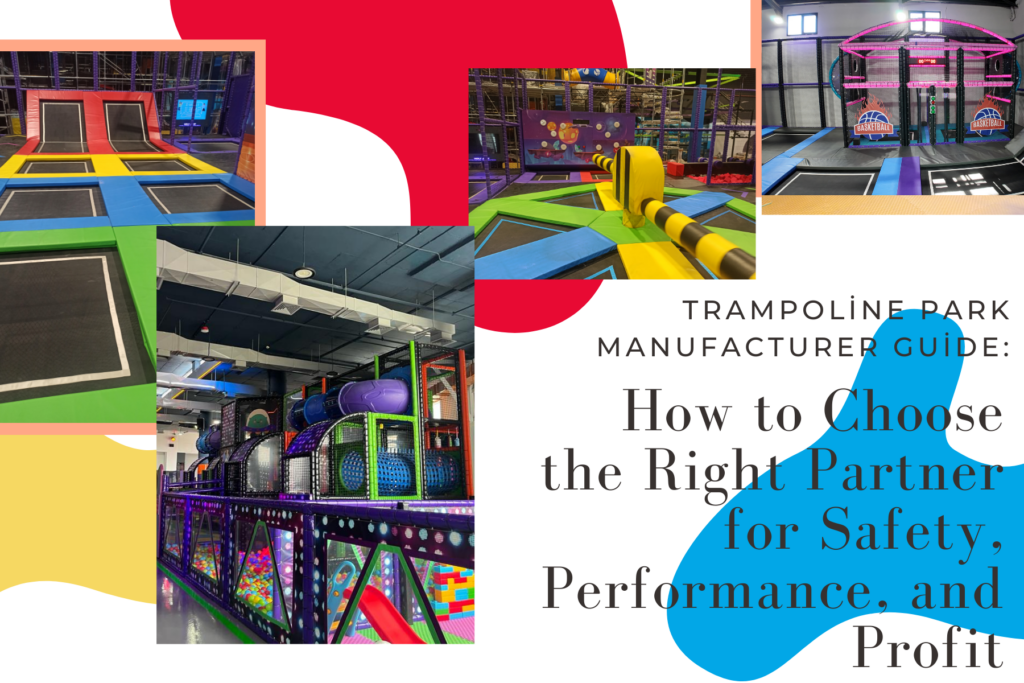
Trampoline Park Manufacturer Guide: How to Choose the Right Partner for Safety, Performance, and Profit

A trampoline park is not a simple “jumping setup.” It’s a high-energy, high-load environment where engineering, safety, user flow, and maintenance planning must work together every day. That’s why choosing the right trampoline park manufacturer is a strategic decision—one that directly affects your opening timeline, operating costs, and long-term reputation.

This guide breaks down what to evaluate, what to ask, and what mistakes to avoid—so your park runs smoothly and keeps guests coming back.


1) What a Trampoline Park Manufacturer Should Deliver

A professional trampoline park manufacturer should provide more than trampoline beds and nets. The real deliverables include:

  • a layout designed for controlled movement and safe transitions
  • zone planning by age and skill level
  • engineering for structure, tension distribution, and durability
  • impact protection and safe perimeter design
  • installation discipline that matches technical drawings
  • after-sales support, spare parts, and maintenance guidance

A trampoline park is a system. If you buy it like a product, you’ll operate it like a problem.


2) Safety Engineering: The Foundation You Can’t Compromise

Safety is not an add-on—it’s built into the physics of the park. A reliable manufacturer should be able to explain:

  • how the frame and bed system handle dynamic loads
  • how tension is distributed across jump zones
  • how transitions are designed to reduce collisions and missteps
  • what impact-protection solutions are used around critical edges
  • what materials are non-toxic, durable, and fire-resistant
  • how clearances, heights, and boundaries are set for different zones

Ask for safety thinking—not just certificates or generic promises.


3) Layout & Flow: Where Guest Experience Meets Risk Control

A great park feels exciting but controlled. That comes from flow—how people move, queue, warm up, and transition between activities.

A smart trampoline park manufacturer designs for:

  • natural circulation (less crowding, fewer collisions)
  • clear sightlines for staff supervision
  • separation of beginners, kids, and advanced users
  • smart placement of “high-energy” features away from entry zones
  • queue management that doesn’t block play routes

Flow is not aesthetics. Flow is how you reduce incidents and increase repeat visits.


4) Feature Selection: Not More Attractions—Better Sequencing

Common modules include dodgeball, slam dunk lanes, foam pits, airbag jumps, ninja courses, climbing walls, and performance trampolines. The key is not how many you add—it’s how they’re positioned.

A good manufacturer helps you build a “play journey”:

  • warm-up zone → confidence zone → challenge zone → peak excitement → recovery
    This rhythm keeps guests engaged longer and improves overall safety by controlling intensity.

5) Build Quality & Materials: The Hidden Profit Factor

Many parks look similar on day one. The difference appears after months of daily use.

Evaluate:

  • steel frame quality and corrosion resistance
  • bed material and stitching durability
  • spring performance (or alternative systems) and long-term fatigue behavior
  • padding density and cover resistance to tearing and cleaning
  • net quality, fixing points, and long-term tension stability

Durability reduces downtime. Downtime kills revenue.


6) Installation Discipline: Your Opening Date Depends on This

A trampoline park is built twice: in engineering and on site. A reliable manufacturer provides:

  • clear technical drawings and an approval workflow
  • labeled packaging and organized shipping plans
  • an experienced installation team (not improvised labor)
  • final inspection and structured handover standards
  • documentation for daily checks and safety routines

A perfect design can be ruined by rushed installation.


7) Operations & Maintenance: Design for Real Life

A park that’s hard to maintain becomes expensive fast. Strong manufacturers support operational reality with:

  • accessible components for inspections and repairs
  • modular designs that allow faster replacement
  • clear daily/weekly/monthly checklists
  • training guidance for staff and supervisors
  • spare parts availability and quick technical response

A trampoline park is a living system—maintenance is part of the business model.


8) Common Mistakes (Avoid These)

  • choosing a manufacturer based only on price
  • mixing age groups without proper zoning
  • ignoring flow and queue pressure points
  • adding too many “peak intensity” attractions near entrances
  • underestimating installation complexity
  • not clarifying spare parts lead times and after-sales response
  • assuming “warranty” equals “support”

The most expensive problems usually start with the words: “It should be fine.”


9) Quick Checklist: Questions to Ask a Trampoline Park Manufacturer

  1. How do you engineer the frame and bed system for dynamic loads?
  2. How do you design transitions to reduce collisions and missteps?
  3. How do you plan age zoning and supervision visibility?
  4. What materials are used for frames, beds, padding, and netting?
  5. How do you manage durability against wear, fatigue, and heavy traffic?
  6. What is your production lead time and shipping plan?
  7. Who performs installation, and what is your on-site process?
  8. What documentation do you provide for daily/periodic inspections?
  9. What does your warranty cover in detail?
  10. How fast can you supply critical spare parts?
  11. What after-sales support channels do you offer?
  12. Can you share real references similar to my venue type and size?

Conclusion

Choosing a trampoline park manufacturer is choosing the future stability of your business. The right partner delivers safety engineering, smart layout flow, durable materials, disciplined installation, and real after-sales support.

When these pieces work together, your trampoline park becomes more than a place to jump—it becomes a reliable repeat-visit engine that earns trust, protects guests, and grows revenue year after year.

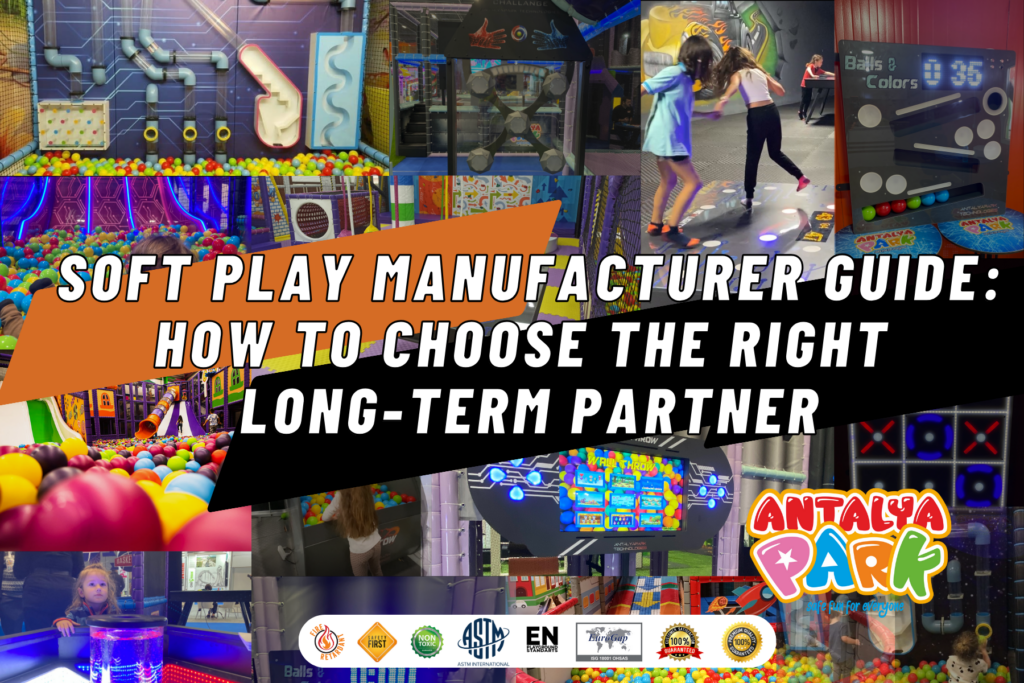
Soft Play Manufacturer Guide: How to Choose the Right Long-Term Partner

A soft play project is not “just buying equipment.” It’s building a high-traffic, high-impact environment where safety, durability, hygiene, and guest experience must work together every single day. That’s why selecting the right soft play manufacturer is a strategic decision—not a quick purchase.

This guide walks you through the key criteria, practical checks, and common pitfalls so you can choose a manufacturer that protects both your customers and your investment.


1) What a Soft Play Manufacturer Actually Delivers

A professional soft play manufacturer should provide more than modules and colors. The real deliverables include:

  • a layout that controls movement and reduces congestion
  • age-appropriate zoning (toddlers vs. older kids)
  • safe transitions between activities
  • durable materials that survive heavy daily use
  • installation that matches engineering drawings
  • after-sales support that keeps your park running

If any of these pieces are missing, your “play area” can become a maintenance headache.


2) Safety: The Non-Negotiable Foundation

Safety is not a badge you add later. It must be designed into the system from the start. A reliable manufacturer should be clear about:

  • safe clearances and anti-entrapment thinking
  • impact protection and correct surface choices
  • stable structure and properly fixed components
  • durable padding and netting that won’t loosen over time
  • non-toxic materials and fire-resistant solutions

A simple “we comply” statement is not enough—ask how they apply safety principles in design, production, and installation.


3) Layout and Play Flow: Why Design Controls Revenue

The best soft play areas feel intuitive. Kids move naturally, parents can supervise comfortably, and staff can manage the space without stress.

A smart soft play manufacturer designs for:

  • smooth circulation (fewer bottlenecks, fewer collisions)
  • “discovery moments” that keep kids exploring
  • clear visibility lines for supervision
  • balanced difficulty so different ages stay engaged
  • zones that support longer play time and repeat visits

Good play flow doesn’t just improve safety—it increases session length and customer satisfaction.


4) Materials and Durability: The Hidden Cost Factor

Many soft play systems look great on day one. The difference shows after weeks and months of real use.

Check for transparency on:

  • foam density and recovery performance
  • PVC quality, stitching strength, and cleaning resistance
  • netting strength and connector reliability
  • structure specs and long-term stability
  • fade resistance and surface wear

Durability is profit protection. Fewer breakdowns means fewer closures—and fewer refunds.


5) Hygiene and Maintenance: Design for Real Life

In malls, hotels, and FECs, cleaning is not optional—it’s daily survival. A strong manufacturer thinks about:

  • easy-to-wipe surfaces and smart material choices
  • fewer hard-to-reach gaps and blind spots
  • modular parts that can be serviced quickly
  • simple maintenance routines with clear checklists

If hygiene is hard, staff struggle. If staff struggle, customer complaints grow.


6) Installation Quality: Where the Project Becomes Real

A soft play area is “built twice”: once in engineering, and once on site. Installation quality affects safety, longevity, and appearance.

A reliable manufacturer should provide:

  • clear technical drawings and a structured approval process
  • planned packaging and labeling for fast installation
  • experienced installers (not improvised labor)
  • final inspection and handover standards

A great design can be ruined by a weak installation.


7) After-Sales Support: The Test of a True Manufacturer

Soft play is a living system. Things wear, loosen, and need adjustment over time. The best manufacturers support you after opening with:

  • fast spare parts for critical components
  • responsive technical support
  • maintenance guidance and inspection routines
  • practical troubleshooting that minimizes downtime

A manufacturer who disappears after delivery is not a partner.


8) Common Mistakes (Avoid These)

  • choosing based only on price
  • skipping age separation and toddler zoning
  • ignoring cleaning access and operational comfort
  • treating installation as “simple assembly”
  • not asking for real references and post-installation photos
  • assuming warranty = long-term support

Cheap becomes expensive when downtime starts.


9) Quick Checklist: Questions to Ask a Soft Play Manufacturer

  1. How do you design for safety beyond “compliance”?
  2. Are your materials non-toxic and fire-resistant?
  3. Do you create custom layouts or only catalog designs?
  4. How do you plan flow to reduce congestion?
  5. What materials and specs do you use for foam, PVC, netting, and structure?
  6. How do you design for cleaning and hygiene?
  7. Who performs installation, and what is your site process?
  8. What does the warranty cover in detail?
  9. How fast can you supply spare parts?
  10. Can you share real references similar to my venue type?

Conclusion

Choosing a soft play manufacturer is choosing the future stability of your business. The right partner delivers safety, strong design flow, durable materials, disciplined installation, and reliable after-sales support.

When these elements work together, your soft play area becomes more than a play zone—it becomes a repeat-visit engine, a trusted family destination, and a long-term investment that stays strong under real use.

Designing the Perfect Indoor Playground: Tips from Antalya Park Experts

Introduction to Indoor Playground Design

Designing the perfect indoor playground isn’t just about building a space where kids can jump and slide. It’s about creating a safe, stimulating, and engaging environment where children can grow, learn, and have fun. At the heart of a great design lies a deep understanding of child development, safety protocols, and play psychology. This is where Antalya Park steps in with years of expertise and global experience in building world-class playgrounds.

The Role of Antalya Park in Modern Playground Innovation

Overview of Antalya Park’s Design Philosophy

Antalya Park approaches every project with a balance of creativity and engineering. Their mission? To build playgrounds that aren’t just visually appealing but also developmentally beneficial and 100% safe. Their team of designers, child development specialists, and engineers work hand in hand to create play spaces that delight children and reassure parents.

Key Innovations by Antalya Park

From digital play panels to interactive trampolines, Antalya Park infuses modern technology with traditional play. Their designs are modular, scalable, and adaptable—whether you have a 100m² space or a 1000m² indoor arena.

Key Factors in Designing an Ideal Indoor Playground

Space Planning and Layout

The layout is the blueprint of any successful playground. Antalya Park recommends creating distinct zones for different age groups and types of play—physical, cognitive, and social. Entry and exit points should be clearly marked and easy to monitor.

Choosing the Right Play Zones

Consider including:
• Active zones: climbing frames, trampolines, and slides
• Quiet zones: puzzles, reading nooks, and soft mats
• Creative zones: art walls, interactive games, and role-play areas

Age-Appropriate Equipment

Equipment should cater to a range of age groups. Toddlers need low-risk, soft activities, while older kids crave challenges like obstacle courses and high slides.

Safety First – Non-Negotiable Standards

Material Quality and Certifications

Safety isn’t a luxury—it’s a requirement. Antalya Park uses non-toxic, durable materials compliant with international safety standards like ASTM and EN1176.

Emergency Exits and Supervision Visibility

Wide visibility ensures that adults can monitor children easily. Emergency exits should be well-marked, unobstructed, and easy for staff to access quickly.

Aesthetic Appeal and Theming Tips

Creating Immersive Environments

Themed playgrounds capture imagination. Antalya Park offers fantasy worlds, jungle themes, space adventures, and underwater experiences—all designed to boost engagement and storytelling during play.

Color Psychology and Attraction

Colors influence mood and energy. Vibrant colors like yellow and red excite, while blues and greens calm. Antalya Park tailors color schemes based on the client’s goals and age group.

Accessibility and Inclusivity in Design

Universal Design Principles

Antalya Park promotes inclusivity with ramps, transfer platforms, and sensory activities accessible to all children, regardless of physical ability.

Supporting Children with Special Needs

Playgrounds include tactile walls, sound panels, and calming zones for children with autism or sensory challenges, ensuring no child is left behind.

Soft Play Manufacturer Antalya Park: Redefining Indoor Play with Innovation and Safety

Soft play equipment plays a crucial role in today’s family entertainment centers and indoor play areas. These play structures provide children with a safe space to play and support their physical development, while also offering investors a profitable and sustainable business opportunity. As a soft play manufacturer, Antalya Park leads the industry by offering high-quality soft play equipment solutions made from premium materials.

Advantages of Starting a Soft Play Business

1. A Safe and Fun Play Experience

The soft play production process involves using high-quality materials to ensure maximum safety while children play. The soft play equipment features soft and shock-absorbing materials, minimizing the risk of injuries from falls or collisions. As a soft play manufacturer, Antalya Park prioritizes safety by using non-toxic, fire-retardant, and anti-climb nets to protect children. Every stage of the soft play manufacturing process undergoes strict quality control.

2. A Profitable and Sustainable Business Model

The demand for indoor play areas is continuously increasing. As a soft play supplier, Antalya Park provides durable and well-structured soft play projects that help investors achieve a fast return on investment. Soft play areas can be integrated into shopping malls, restaurants, hotels, entertainment centers, and kindergartens, ensuring high customer satisfaction and revenue generation.

Antalya Park, headquartered in the heart of Antalya, Turkey, is a globally recognized soft play manufacturer specializing in safe, fun, and imaginative indoor playground solutions. With more than two decades of industry expertise, Antalya Park has become synonymous with excellence, creativity, and high-quality production standards. The company’s mission is to create joyful environments where children can learn, explore, and develop through active play.

From their state-of-the-art 7,000 square meter production facility, Antalya Park designs and manufactures custom indoor playgrounds, soft play zones, toddler areas, and themed play units. Their installations are tailored to suit a variety of venues including family entertainment centers, shopping malls, schools, nurseries, and hotels. The company prides itself on using only non-toxic, fire-retardant, and durable materials, ensuring that every product is built with safety and longevity in mind.

Antalya Park follows rigorous international safety standards such as EN1176 and ASTM, making their products suitable for export to over 65 countries worldwide. Each soft play design is engineered to balance aesthetic appeal with developmental value, promoting motor skills, coordination, and social interaction among children.

What truly sets Antalya Park apart is their end-to-end project approach. From initial concept development and 3D design visualization to manufacturing, shipping, installation, and after-sales support, they offer comprehensive turnkey solutions. Their experienced team works closely with clients to transform ideas into fully operational and engaging play environments.

Antalya Park’s commitment to innovation, customer satisfaction, and child development has made them a preferred partner for investors and operators in the play industry. To explore their portfolio or start your own soft play project, visit their official website at https://antalyapark.com.tr.

Choose Antalya Park — where creativity meets safety in every play space.

Antalya Park: Crafting Creative and Safe Soft Play Spaces Worldwide

Antalya Park, based in Antalya, Turkey, is one of the leading names in the soft play manufacturing industry. With years of experience and a strong reputation, the company has developed thousands of custom playgrounds for children across the globe. Their focus lies in producing safe, colorful, and fun environments that help kids play, interact, and grow.

At the heart of Antalya Park’s operation is its advanced production facility covering 7,000 square meters. Here, skilled designers and technicians work together to create tailored play areas for various locations—such as shopping centers, schools, nurseries, hotels, and indoor family entertainment venues. The equipment they produce is made from durable, fire-resistant, and non-toxic materials that meet top safety standards, including EN1176 and ASTM.

What makes Antalya Park stand out is their commitment to combining creativity with functionality. Every soft play area they design is meant to encourage physical activity, motor development, and social skills in a safe and engaging setting. The company doesn’t just sell playground equipment—they build complete experiences.

From the first design sketches to the final installation, Antalya Park provides full support at every step. Their team listens carefully to each client’s needs, offering custom designs, 3D visuals, and after-sales service. Their solutions are practical, visually appealing, and built to last.

With a global footprint and a dedication to quality, Antalya Park continues to be a reliable partner for businesses looking to invest in safe play environments. For more information, you can visit their official website: https://antalyapark.com.tr.